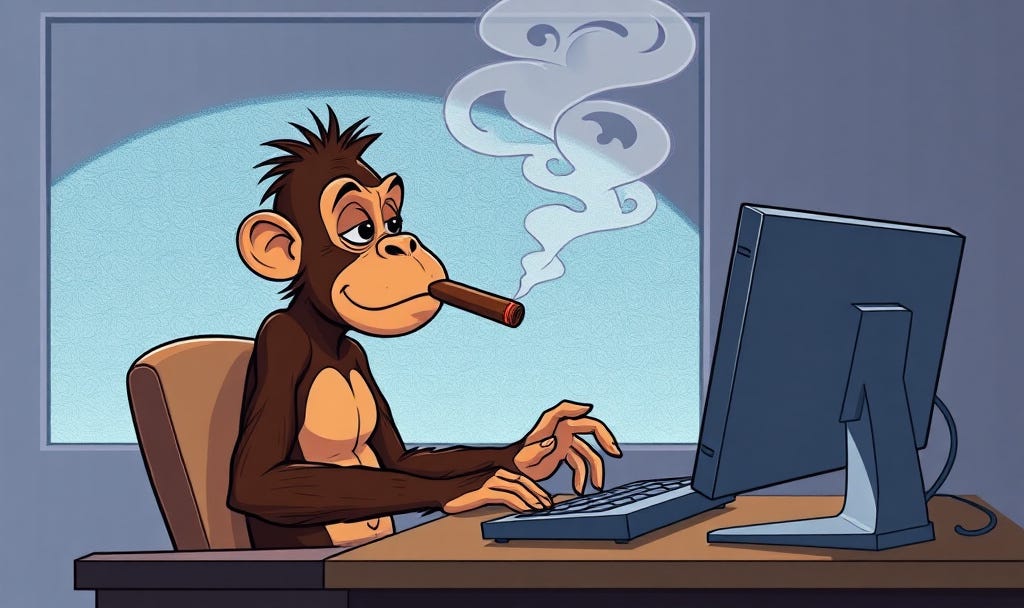
I smoked for twenty years. It’s a good thing I quit six years ago because, holy shit, does Squirt absolutely hate smoking. He’s irrational about secondhand smoke, I cannot even imagine how much I’d have to hear from him if I still snuck out to the garage 10 times a day to get my fix. But I’ve never hidden from him that I’m a former smoker. And, in fact, it’s come up in conversation over and over again when we talk about addiction, self-destructive behavior, and overreach of the government.
Should the government totally ban cigarettes? Should they tax them into oblivion and legislate them out of existence like Australia is doing which has led to a resurgence in organized crime and black markets? Should people be free to slowly kill themselves? Where is the line between personal responsibility and protecting society from itself?
Always fun questions. Squirt, by the way, goes full on Communist command economy when it comes to cigarettes. Government should crush it under its jackboot and rip it out root and branch. Wipe out the companies and jail the leaders. Hardcore.
Addiction
Quitting smoking was probably the most difficult thing I’ve ever done. I loved smoking. I started when I was fifteen years old and I grew to adulthood with cigarettes as the most effective emotional regulator I’ve ever found. Anxious? Smoke. Depressed? Smoke. Happy? Smoke. Hungry? Smoke. Sleepy? Smoke. Angry? Smoke.
Think about it for a minute. I was fifteen years old and physiologically I was nowhere near grown. But my body was a storm of hormones, emotions, drama, and all the other things that make an adolescent itchy in their brain and body. Lighting up scratched the itch. My mind didn’t know how to stop. It didn’t know how to reset. But lighting up made it quiet and that’s been a thing I’ve sought my whole life.
Every cigarette was meditation. An opportunity to slow down and breathe. To process and regulate and deal with all the things we deal with as a human. Sure, it wasn’t good for me physically but mentally you better believe it was a goddamn amazing thing. What do you mean I should quit?
Escape
Quitting required me to relearn how to be human.
Quitting required me to relearn how to exist.
I couldn’t do it on my own. I ended up using Chantix which is a miracle drug in my opinion, even though I fucking despised it. I think there’s a hilarious (funny-not-funny) line in that link:
If you are using varenicline [Chantix] and experience hostility, agitation, depression, suicidal thoughts, or changes in how you act that you don’t think are due to quitting smoking, you should stop taking the medicine and talk to your doctor right away.
Because you’re absolutely going to feel hostility, agitation, and depression just from quitting and they know it. You’re gonna feel all-the-things. For me, being on that drug was also like my brain was wrapped in wool. Everything was fuzzy and plodding and just sluggish. I hated being on Chantix.
But I did quit. I relearned how to be human. I did a thing they say is harder than quitting heroin. Six years later, though, and I still think about smoking probably on a weekly basis.
This is at the top of my brain whenever I think about addiction. How even more than half a decade later I still sometimes don’t feel “right” because I haven’t had a cigarette. It’s what I think about when I see headlines about how Google and Meta just lost a major court case about the addictiveness of their social media features.
Social Media
I thought it was interesting that The Dispatch article above starts with talking about smoking. I’ve been framing social media harms that way with Squirt for a while now but to see someone else do it was gratifying. I believe the parallel to smoking is also mentioned in The Amazing Generation by Jonathan Haidt and Catherine Price. It’s a very solid metaphor that I think we’ll see grow as the pushback on social media, and the realization that it’s not good for us, continues to grow.
Squirt asks: “If smoking was so bad why did people do it?” and there are a couple points I make. First is that the extent of the danger wasn’t always clear even if we knew it was “bad.” Another was that the social stigma that has grown around it didn’t really exist back then either. Another is, as I tried to illustrate up above, it is a very useful habit for some folks. Utility and being virtuous are not required to be together.
But the primary answer is pretty simple: I made a mistake. Fifteen years old I tried my first cigarette and I fucking loved it. It was awesome.
So with social media. It becomes a part of life. It is useful and enjoyable. It gives you those little drips of dopamine. Whether you’re comparing yourself to someone else or sharing in rage or just finding the first people that think like you — you’re enjoying it and hating it both. You’re doing it when you get up in the morning and when you’re sad, happy, hungry, sleepy. Before you know it, it’s just part of your waking moments every. single. day. You realize you cannot get through a day without the little ritual of it.
And the kids watch the parents do it. I have a down moment and I check back in on reddit or Facebook. I learned it from watching you, right?
Blame
Fault is so hard to assign here. The internet is an attention economy so of course social media companies, and news companies, and Substackers, and every other damn thing just is thirsty for attention. Eyeballs are dollars. So creating something that holds attention is sort of the whole point. Can you fault a company for doing what it does to make money?
Of course personal responsibility should also be a factor. I think America is already a bit too litigious. If I die from some smoking related factor down the road it’s not the tobacco company’s fault. Surprisingly my life insurance company says I’m considered a “nonsmoker” now though, which I thought was interesting.
Of course, “everyone is doing it,” right? This has weight. It’s the strongest argument for the kids as well — to not be one left out from social media and having a smartphone and all of that crap. It’s like they’re surrounded by kids that are smoking, and talking about it, and socializing while they do it. The kid that isn’t using it is the weird one.
I envy people their certainty. Squirt’s hardcore approach to eliminating cigarettes from the world. Banning social media from younger kids and removing a parent’s agency in how they raise their kids. Or the opposite extreme of just leaving it all up to personal responsibility and agency. I see the points and stand here ambivalent. I stand here thinking real hard about when Squirt will get some of these things because I remember very clearly just what happened when Squirt’s dad embraced an addiction that will be with me until the day I die.
Squirt Says…
I know I might be clinging on to a certain part of it but a second hand smoke and in fact a second hand vape is horrible for you. You can read where I got it from here but basically a second hand smoke is when a person nearby smokes and you breathe it in. It cause[s] 19,000 people per year from it [to die], and adults that do not use tobacco product but are exposed to a second hand smoke have 20 - 30% chance increase of developing lung cancer. So, do your research before you make a comment like that.
Dad Responds…
I’m reminded of the piece I wrote — The Dose Makes the Poison. It is very true that second hand smoke is bad, but the 20 - 30% increases are for those living in the house with a smoker and constantly exposed, not for someone who encounters it walking down the street outside. The larger question that we keep returning back to, however, is at what point is the government allowed to force someone to not do something in order to protect others. Where does a person’s autonomy and freedom stop and society’s liberty to be “safe” being?