


On the face of it that just seems as obvious as saying the sky is blue. The internet of the future will be different from the internet of 2025. But when I say this I’m thinking of something deeper because the internet of 2025 is actually almost exactly the internet of 2005. A little more clever but with the same soul. No, when I say “change” I’m talking about a fundamental paradigm shift. I just need lots of words to explain…
Yesterday it was announced that Walmart is going to team up with OpenAI and Walmart’s stock surged. When I followed that link I was met with the following pop-up from CNBC:
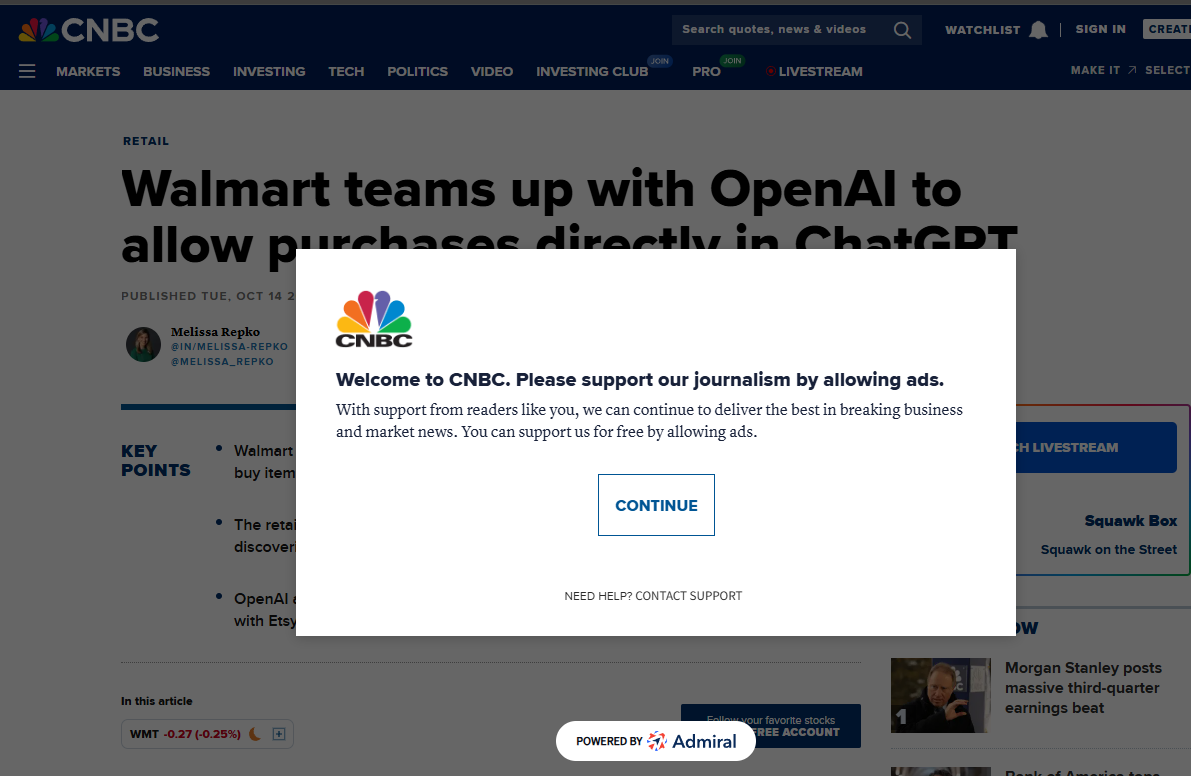
Screens like this are very common for me, and for a growing number of people who run ad-blockers. These ad-blockers just hide all the marketing on a website - all the pay-per-click things that suffuse free websites like an infection. I am incredibly ambivalent about running one of these because if everyone did when I am doing then the internet as it exists dies. But for myself, I have the technical know-how and a number of sites (mostly gaming sites) are completely broken if I do not run an ad-blocker. So I do run one and just feel a little bad about it. I have a growing allow-list of websites like CNBC above to soothe my conscience. Forevermore I will see advertising on CNBC because they threw that message up above at me.
And I was happy to turn it off! I want the people writing that website, and the people running that website, to get paid! These are geeks of the same flavor as me! Again, if enough of us don’t look at those ads then they will not be paid and the company will fold. Because here’s the thing…
If you understand nothing else about the internet understand this: The free internet is paid for with your attention.
That’s it, that’s the keystone of the internet. Your TikTok addiction is a trickling stream of pennies that flows into a raging river of cash. Facebook is showing you everything-except-your-friends because they want to widen their own stream and monetize you more. Even my morning newsletters are driven by the things I click on. Let’s take another look at the link I have up above:

See that little thing at the end? It’s called a query parameter. And the utm_source query parameter is a piece of information that ties where you came from (my TLDR newsletter) to where you landed (the CNBC website). I asked ChatGPT (another free service!) to summarize for me:
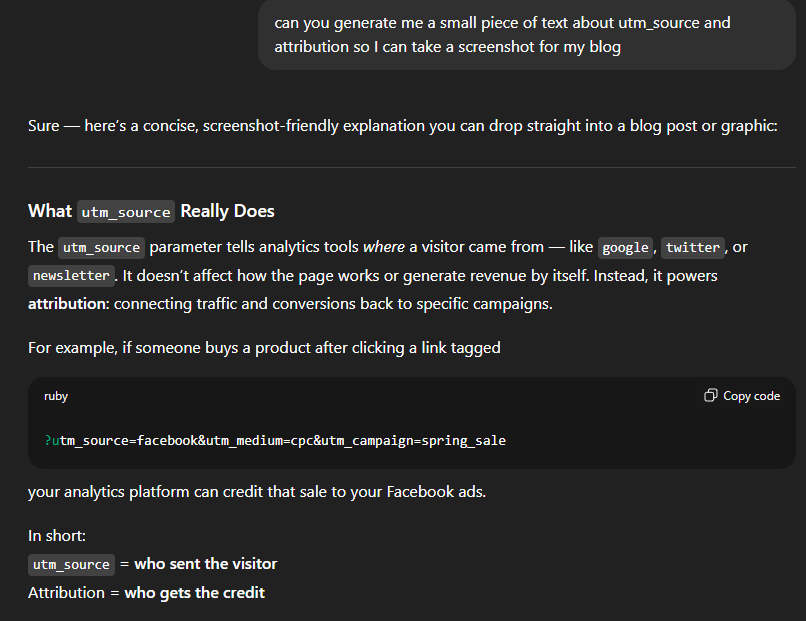
Almost every link you follow uses the Urchin Tracking Model. And almost every interaction you have with the internet is about getting your attention. Here’s an example and a full screenshot of a Google search that Chris Hayes told me about in his book I read recently.
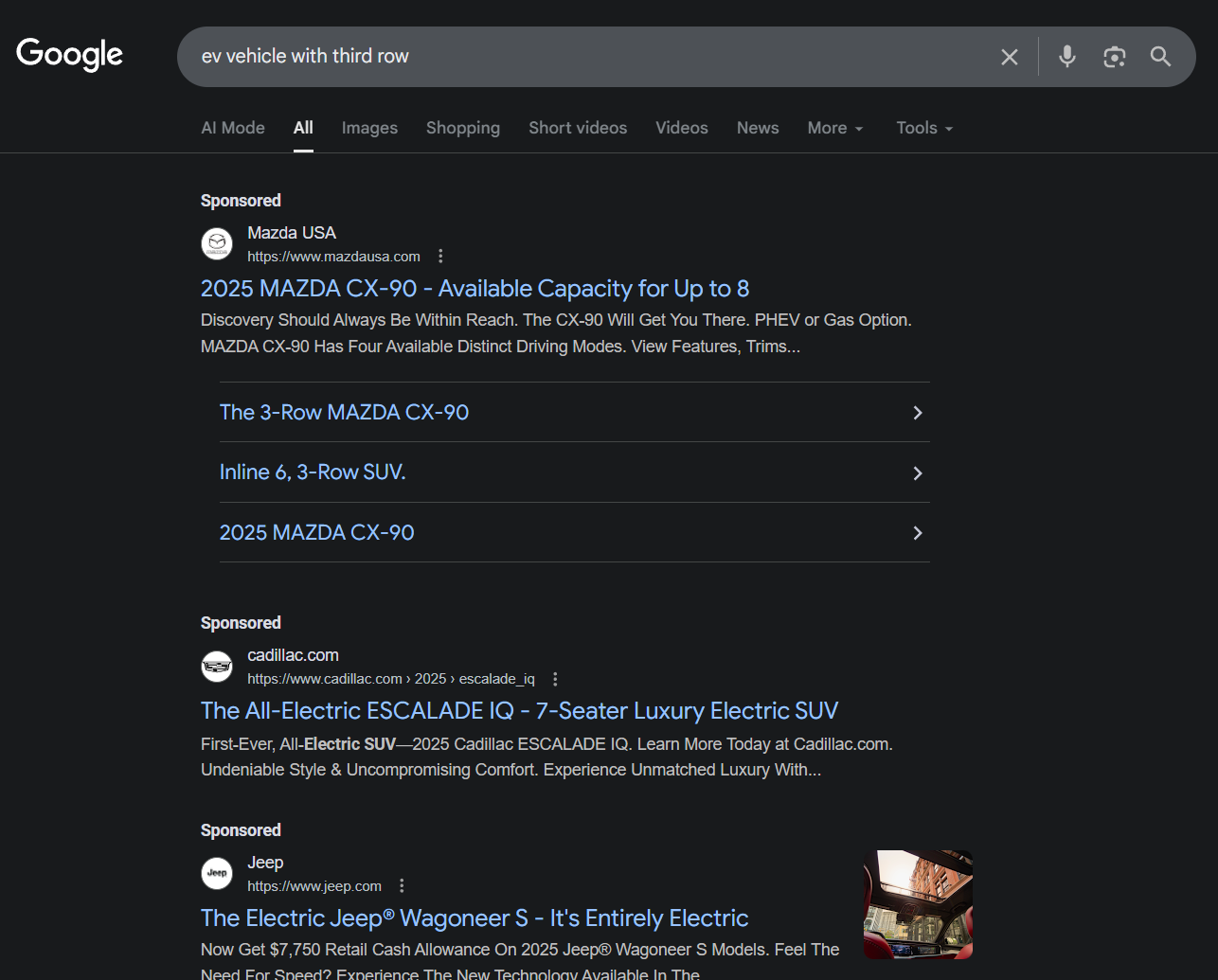
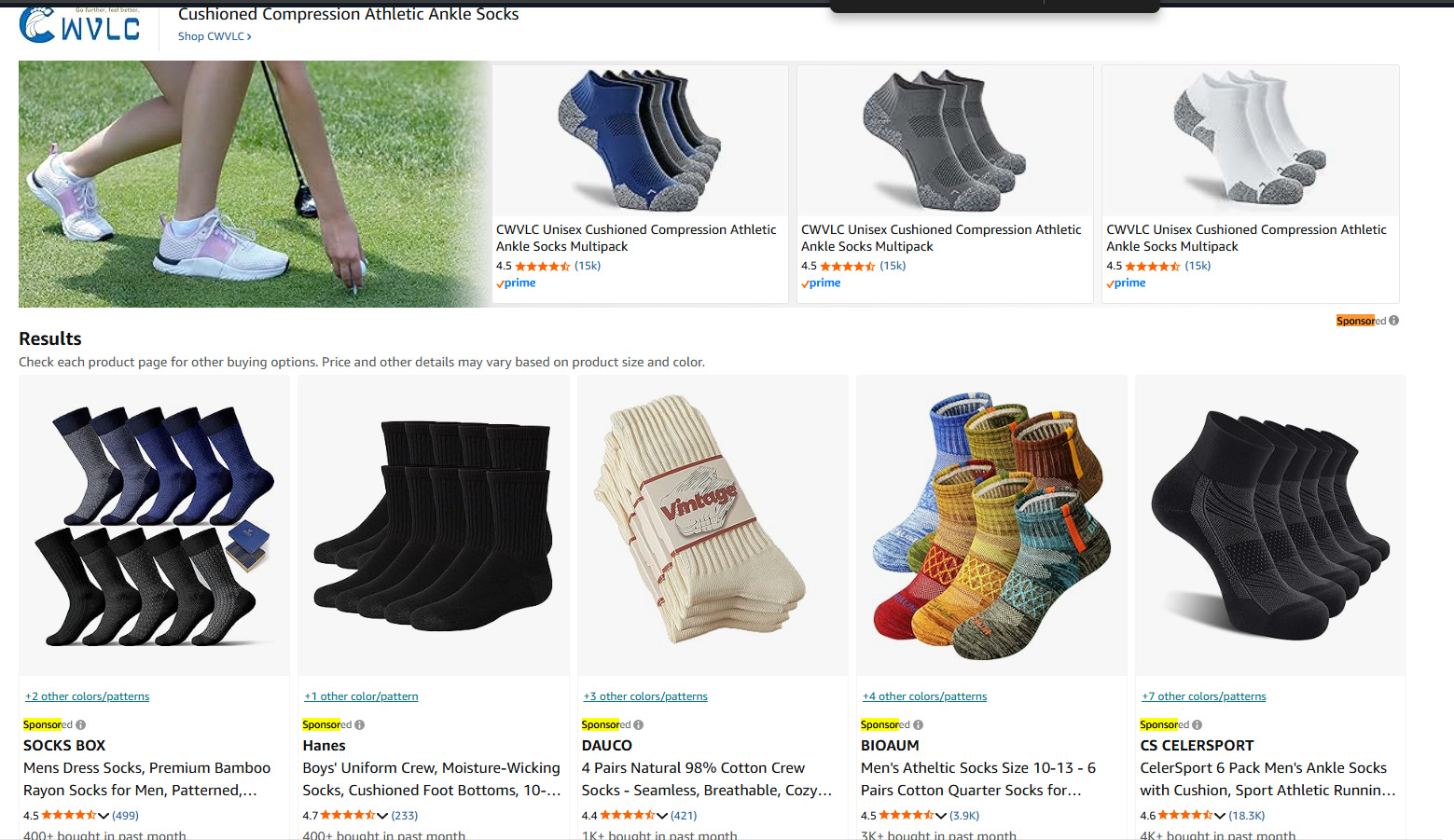
The search results aren’t even on the fucking page. It’s just advertisements! Advertisements that, if I click them, will result in Google getting paid some piddling amount of money. Here’s a search on Amazon for socks with the word “sponsored” showing up six times.
Okay, one final story about this. At some point Gmail decided that I shouldn’t see anything from NordicTrack where I got my elliptical from (and which I love). But I’ve been trawling through my spam filter recently because it also made some decisions about substack emails and I’ve been monitoring to see if I fixed the problem. Whilst in there I saw a NordicTrack email about trading in my elliptical for a new one and I clicked through to the site to find that the price has doubled in the past two years.
And immediately all of my Facebook ads become exercise equipment. Literally my next click was to go to Facebook and what do I see:

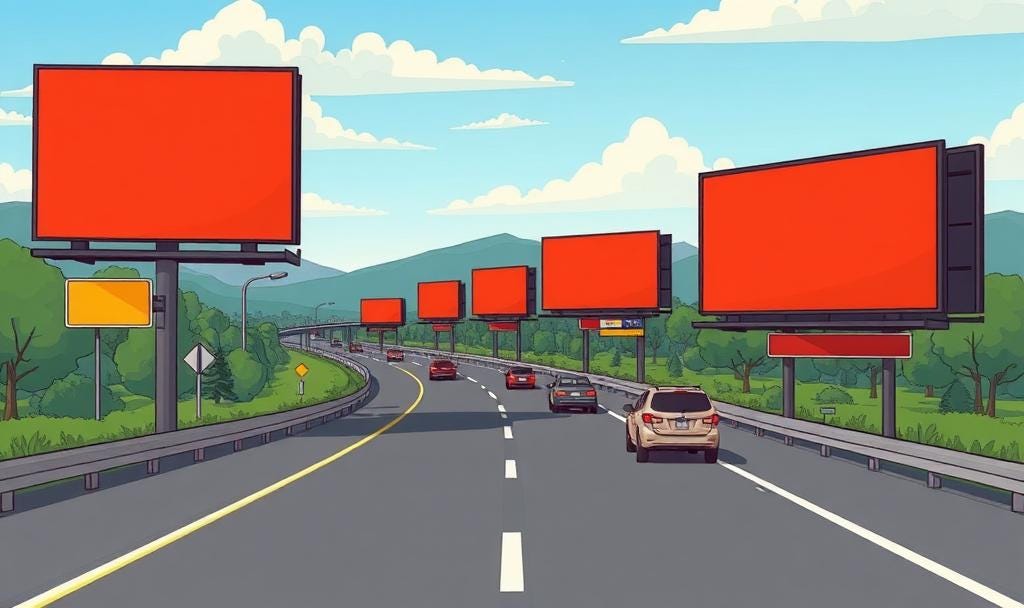
This is running quite long and I didn’t even get to my point yet but I needed this build up and the examples just kept falling into my lap. You know the experience of driving down the interstate and seeing endless billboards of advertisements? That is exactly what the internet is, it’s just harder to notice sometimes if you aren’t thinking about it. This is what pays for the internet. It pays for hundreds of thousands of nerds like me, millions of computers in datacenters, billions of feet of networking cable, and it is one of the largest consumers of energy in the world.
But here’s the thing. People are going to stop paying attention. Because…
That line up there where I said the internet is “one of largest consumers of energy in the world” - originally I wrote that as “the single largest consumer of energy in the world.” And then I took that statement to ChatGPT and asked it if it was true because I wasn’t really sure. I do this frequently, turning my free ChatGPT service into a research assistant. In this case it resulted in my rewriting my statement because I was flat wrong.
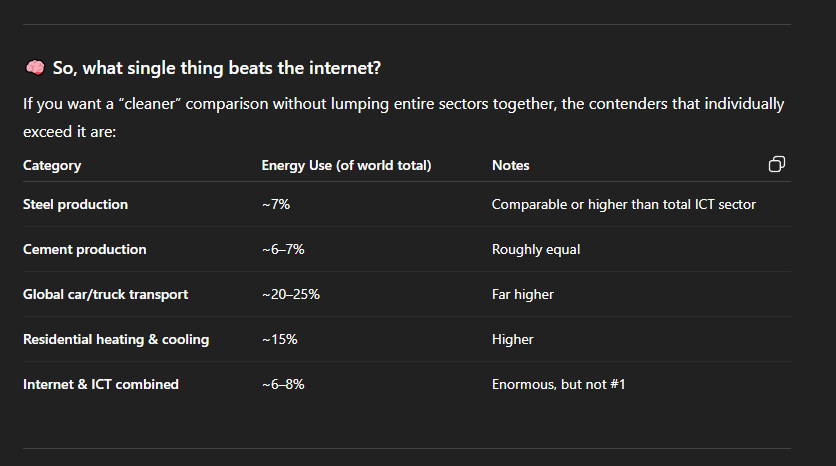
And now I’m finally getting to my point. Before, if I wanted to fact-check my incorrect assumption that the internet uses more energy than any other thing I would have had to go…to the internet. I would have Googled a question and seen sponsored listings. I would have went to a website, which had advertisements. I would have clicked links from websites or blogs that had the utm_source attribute so someone could get paid for shunting traffic somewhere. Maybe I’d go to TikTok and search “energy consumption in the world.” All just me driving down the “information interstate” looking at billboards and contributing to little trickling streams of pennies that turn into raging rivers.
But I didn’t. I went to ChatGPT and I asked it some questions and chatted with it and never looked at single thing that could be monetized. I got what I needed without my attention being given to anything but ChatGPT. I didn’t make a single company money. I didn’t look at a single digital billboard to answer my question. So I’m a loss-leader for ChatGPT and I’m not even on the scoreboard for Google, TikTok, or a news site. But I just got the information I needed.
This is a big fucking deal. This is a direct assault on the pocketbook of every internet company that lives on making money from our attention.
The internet must change. It’s only a question of how it will change. The advent of LLMs have eliminated the need for human eyes to rove through the internet. And that is why Walmart’s stock surged at the news of the partnership. Because it’s a concrete example of a way that Walmart will monetize us while we’re using ChatGPT. Walmart is the second largest online retailer in the world and ChatGPT will start taking a little trickle of pennies off everything you buy off Walmart through ChatGPT.
This is only the beginning of the changes. And they won’t be immediate. But traffic is already dropping fast on websites. And there’s already companies taking notice. Consider this article that came across my radar today about Cloudflare responding to the changing world.
I don’t know if the AI hype is a bubble. But I do know that credible sources are saying that AI hype is what’s propping up our entire economy right now. And I do know that, even if it is a bubble, that the internet I grew up with is going to die and this is something that will impact everyone.
Squirt Says…
I would say, and it is a bit negative, but the internet is getting worse. More ads being fake and it’s even easier with AI. Very easy to track and it’s sold all over the place and can even make you pay more money with the data for your spending habits. So whether the internet is getting better or worse - I would say worse.
Dad Responds…
I think this is true but also short-term. On the other hand, the data will be even more centralized and vastly more personal depending on how places like ChatGPT decide to store information about us.
Yeah, I’m already thinking I need to start downplaying my web experience and showcasing my AI savviness. I’m hearing arguments that UI/UX and even digital brands might be getting left behind if the whole OpenAI + Walmart thing is a model of the future.